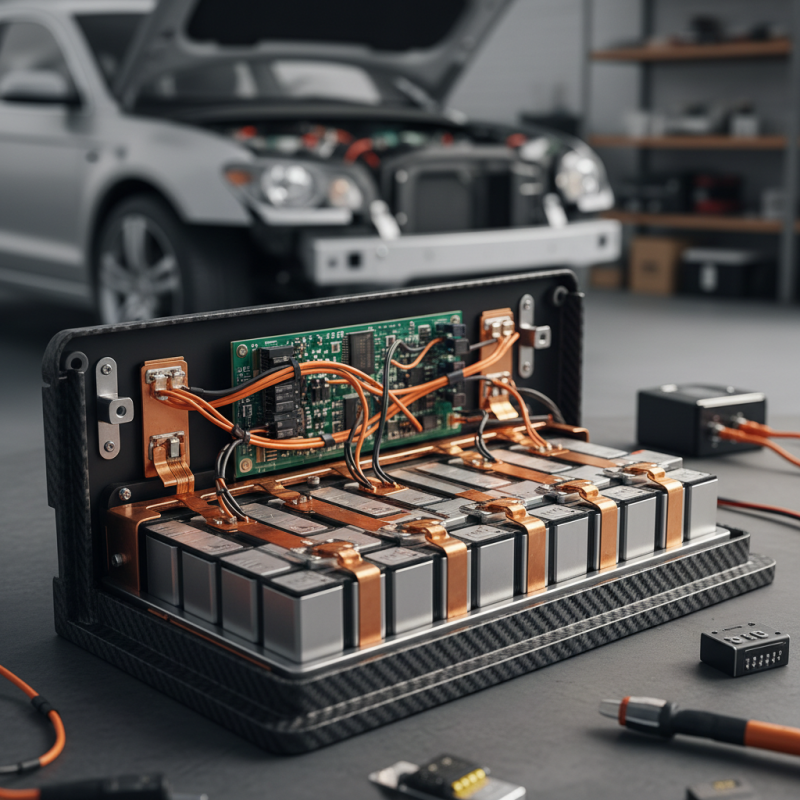
How to Choose the Best Lithium Battery for Your Car?
Choosing the right Lithium Battery Car can significantly influence performance. In recent years, lithium batteries have become the preferred choice. According to industry reports, global sales of lithium battery cars increased by over 50% last year. This boost reflects their demand for efficiency and longevity.
However, not all lithium batteries are created equal. Factors like capacity, weight, and cycle life play crucial roles. For instance, a high-capacity battery offers longer driving range but may add weight. Some consumers overlook these details, leading to choices that may not fit their needs.
The market is filled with options. Brands offer various specifications, complicating decision-making. It's essential to analyze your driving habits and needs. A mismatch might result in inadequate performance. Balancing range and weight requires careful consideration.
Understanding Lithium Battery Types for Cars
When selecting a lithium battery for your car, understanding the different types is crucial. Lithium-ion batteries are common due to their high energy density. They are lightweight and offer fast charging capabilities. However, not all lithium batteries are created equal. Lifespan can vary significantly between types, and some may not suit your needs.
Another option, lithium iron phosphate (LiFePO4), is known for its stability. This type has a longer cycle life and can handle high discharge rates. It performs well in extreme temperatures, but it tends to be heavier and bulkier than traditional lithium-ion batteries. Evaluating the trade-offs between weight and longevity is essential.
There are also lithium polymer batteries, which can be shaped to fit various spaces. They offer flexible installation but can be more expensive. It's worth considering your car’s specifications before making a decision. Sometimes, users overlook compatibility issues. This choice can lead to subpar performance. Researching specifications and reviews can greatly aid in the selection process.
Evaluating Battery Capacity and Power Output
When choosing the right lithium battery for your car, evaluating battery capacity is crucial. Battery capacity is measured in amp-hours (Ah). A higher capacity means more energy storage. It’s vital to assess your vehicle's energy needs. For example, electric cars typically require batteries with at least 40 Ah.
Power output is another key factor. This measurement indicates how much power the battery can deliver at a moment’s notice. Cars with high power demands, like performance vehicles, need batteries that can support quick acceleration. Look for specifications on cold cranking amps (CCA). CCA is important for starting the engine, especially in colder climates.
Even with these guidelines, finding the ideal battery can be challenging. Some might overlook compatibility with their vehicle's system. Others may focus solely on price without considering long-term performance. Assessing both capacity and output can prevent costly mistakes. Always research and reflect on your choices before making a purchase.
Assessing Compatibility with Your Vehicle's Electrical System
When selecting a lithium battery for your car, compatibility with your vehicle's electrical system is essential. Many vehicles operate on a 12V system, while others may require a 24V or higher voltage. It’s crucial to check your vehicle manual to determine the required voltage. According to a recent study by the Automotive Battery Research Institute, over 30% of battery failures are linked to voltage mismatch.
You must consider the battery's size and weight as well. Lithium batteries vary significantly in dimensions. Using a battery that doesn’t fit snugly can result in physical damage or even electrical failure. The same study shows improper fitting can lead to a 25% increase in premature battery issues.
Moreover, pay attention to the discharge rate. A battery with an inadequate discharge can result in sluggish performance. This is particularly evident in electric vehicles, where the energy output must match the vehicle's needs. Frequent discharges that exceed the battery capacity can shorten its lifespan dramatically. Reflect on your driving habits and the expected energy usage. This part is often overlooked, but prioritizing compatibility will save you time and money in the long run.
Considering Battery Weight and Size Limitations
When selecting a lithium battery for your car, size and weight are critical factors. A heavy battery may lower your vehicle's performance. Excess weight can affect acceleration and handling. Therefore, understanding your car's specifications is essential. Measure the available space in your vehicle. Ensure the battery fits snugly. A loose battery can lead to vibrations, which may shorten its lifespan.
In terms of weight, consider how a lighter battery affects the car's balance. Some drivers prioritize performance; others value efficiency. Striking a balance can be tricky. A lightweight option can enhance speed but may compromise power output. Be cautious with your choice. Reading reviews and consulting automotive forums can supply insights but may not cover all scenarios. Each car has unique traits, so experimentation may be necessary. Sometimes, the best decisions come from trial and error.
Reviewing Warranty and Lifespan for Long-Term Investment
When considering a lithium battery for your car, it's crucial to evaluate its warranty and lifespan. A good warranty assures you of the manufacturer's confidence in their product. Look for options that offer at least a five-year warranty. This indicates a commitment to quality. However, not all warranties are the same. Some may cover only defects, while others include performance guarantees. Always read the fine print carefully.
Lifespan is another essential factor. Most lithium batteries last between 8 to 15 years, depending on usage. Factors like climate and charging patterns can affect this lifespan. A battery might perform well initially but decline quickly if not maintained properly. Regularly checking the battery's health can help prevent unexpected issues.
Investing in a lithium battery may seem appealing, but weigh the lifespan against your specific needs. Some batteries may promise longer usage but at a higher price. Will they really last that long? It's worth reflecting on these aspects before making your choice. What appears perfect on paper might not always be practical in real life.
How to Choose the Best Lithium Battery for Your Car? - Reviewing Warranty and Lifespan for Long-Term Investment
| Battery Type | Capacity (Ah) | Lifespan (Years) | Warranty (Years) | Price Range ($) |
| Lithium Iron Phosphate (LiFePO4) | 50 | 8 | 5 | 300 - 600 |
| Lithium Nickel Cobalt Aluminum Oxide (NCA) | 75 | 10 | 6 | 500 - 900 |
| Lithium Manganese Oxide (LMO) | 60 | 7 | 4 | 400 - 700 |
| Lithium Polymer (Li-Po) | 55 | 6 | 3 | 350 - 750 |
| Lithium Cobalt Oxide (LCO) | 50 | 5 | 2 | 600 - 1100 |