Why Do You Need an Anti Drone Device for Your Security?
In an era where aerial technology advances rapidly, the need for security measures intensifies. Organizations and individuals face new threats from unauthorized drones. An Anti Drone Device is essential for safeguarding sensitive areas. These devices detect, track, and neutralize potential drone intrusions.
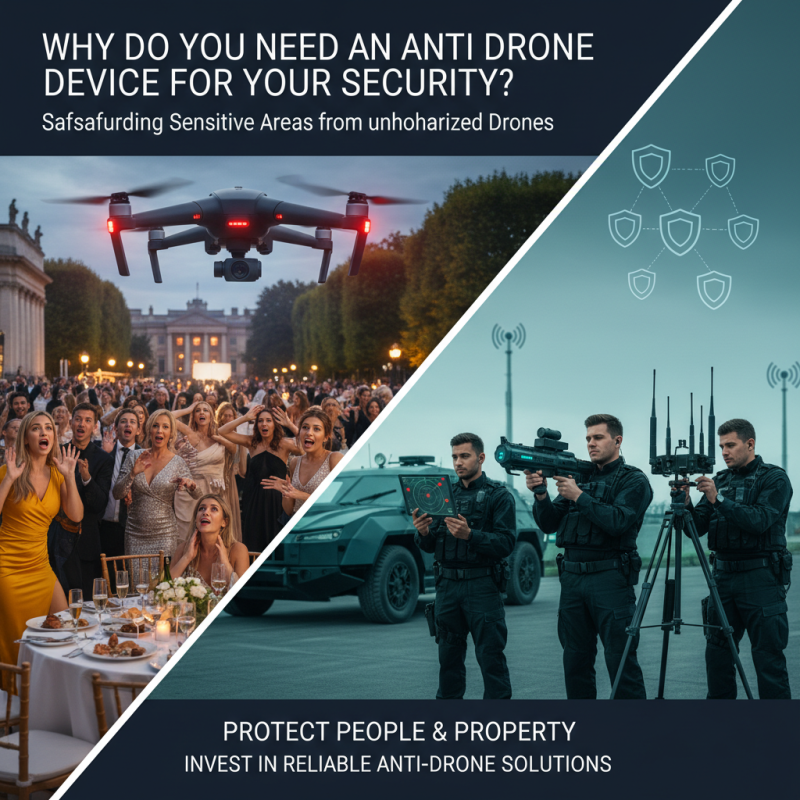
Imagine a high-profile event where an unexpected drone hovers overhead. Panic ensues, as guests worry about their safety. In this scenario, an Anti Drone Device can swiftly mitigate risks. It allows security personnel to regain control. However, not all devices are created equal. Some lack effectiveness, while others may interfere with legitimate operations.
Understanding the complexities of drone technology is vital. As drones become more accessible, so do the risks associated with them. Investing in reliable Anti Drone Devices must be part of a comprehensive security strategy. Effective device selection and proper deployment can significantly enhance safety. Ultimately, the protection of people and property hinges on these specialized technologies.
Understanding the Threat of Drones in Modern Security Environments
The rising prevalence of drones poses significant threats in modern security environments. A report by the Federal Aviation Administration (FAA) predicts that by 2025, over 1.7 million drones will be registered in the United States alone. This rapid growth creates new challenges for security personnel. Drones can easily be used for espionage, delivering contraband, or even conducting attacks.
Drones can carry payloads discreetly, making detection difficult. Research indicates that unauthorized drone flights have increased by 30% over the past year. These incidents raise concerns for public safety. High-profile events, such as concerts or sports, are particularly vulnerable. Drones can invade airspace without warning, leading to potential chaos and disruption.
While many organizations recognize the threat, only a fraction have implemented anti-drone solutions. Inaction can lead to serious consequences, both financially and reputationally. Effective counter-drone technology is becoming essential as incidents rise. This creates a pressing need for organizations to assess their security measures. Investing in anti-drone devices may provide a proactive solution to an increasingly complex aerial threat landscape.
The Importance of Anti Drone Devices in Protecting Sensitive Areas
In today's world, the rise of drone technology has outpaced regulations. This makes sensitive areas increasingly vulnerable. Anti-drone devices have emerged as vital tools for protecting critical locations such as military bases, power plants, and government buildings. These devices detect, intercept, and neutralize unauthorized drones, thereby safeguarding both assets and people.
The importance of these devices goes beyond just defense. They provide a sense of security in an era where privacy is no longer guaranteed. Organizations can feel more secure knowing they are protected from potential surveillance or threats posed by drones. This feeling of safety can enhance operational efficiency and focus on essential tasks, rather than worry about aerial intrusions.
While the technology behind anti-drone systems is impressive, challenges remain. Integration with existing security measures is not always seamless. Training personnel to operate these systems can be time-consuming and resource-intensive. These factors highlight the need for ongoing improvement and adaptability in anti-drone solutions to keep pace with evolving threats.
How Anti Drone Technology Works: Key Features and Mechanisms
Anti-drone technology has become a crucial aspect of modern security systems. As drones become more prevalent, the need for effective countermeasures also rises. Studies show that commercial drone use is projected to reach 1.5 million by 2025. This growth brings increased risks, ranging from privacy invasions to potential threats at events and private properties.
The key features of anti-drone devices include detection, tracking, and neutralization capabilities. Detection often relies on radar and radio frequency analysis to identify unauthorized drones. The tracking process monitors their flight patterns in real time. Effective systems utilize a combination of technologies to ensure comprehensive coverage. According to a recent industry report, approximately 60% of all reported drone incidents were linked to unauthorized flights in sensitive areas.
Neutralization mechanisms vary. Some devices employ GPS jamming to disrupt drone navigation. Others use net capture systems to physically retrieve drones. Challenges remain in ensuring that these solutions comply with regulations. Moreover, while effective, these technologies can inadvertently disrupt legitimate drone activities, highlighting an area for further refinement. The balance between security and operational integrity is vital as anti-drone technology develops.
Importance of Anti-Drone Devices for Security
Real-World Applications of Anti Drone Devices for Various Sectors
In recent years, various sectors have increasingly recognized the threat posed by drones. For instance, the global anti-drone market is projected to reach USD 2.59 billion by 2026, growing at a CAGR of over 30%. This significant growth highlights the urgent need for effective security measures against unauthorized drone usage.
In the military sector, anti-drone devices provide vital protection from surveillance and potential threats. Systems like jamming technology can disable drones in critical areas, ensuring the safety of personnel and sensitive operations. Additionally, airports are adopting anti-drone solutions to prevent disruptions. According to a report by the International Air Transport Association, nearly 25% of airports worldwide have experienced drone-related incidents. This alarming number stresses the importance of implementing proactive defenses.
The commercial sector is not immune either. Businesses and event organizers are at risk of corporate espionage via drones. Reports indicate that over 40% of companies have reported security breaches due to aerial surveillance. If left unchecked, these risks could lead to significant financial losses. The need for reliable anti-drone devices has never been clearer, emphasizing the critical intersection of technology and safety in today's landscape.
Choosing the Right Anti Drone Solution for Your Security Needs
In today's rapidly evolving security landscape, selecting the right anti-drone solution is crucial. Drones present unique challenges, from unauthorized surveillance to potential threats. According to the "Drone Security Market Report 2023," the demand for anti-drone systems is projected to grow at a rate of 24% annually. This highlights the urgency for effective protection against drone-related risks.
When choosing an anti-drone device, consider your specific security needs. For example, facilities with sensitive information might require jamming technology, while public venues may benefit from detection systems. Research indicates that over 60% of organizations reported unauthorized drone activity in the past year, emphasizing that no sector is safe from this emerging threat.
Tip: Before investing in an anti-drone system, evaluate the area that needs protection. Different environments may dictate distinct technological needs.
Another critical factor is scalability. Your anti-drone solution should adapt as your security requirements change. An effective system should not only stop drones but also provide data for threat analysis. Reports show that 40% of companies find it difficult to integrate new solutions with existing security frameworks. This can lead to gaps in protection and potential vulnerabilities.
Tip: Engage with industry experts to understand the latest advancements and best practices. This ensures your approach remains proactive and effective.
Why Do You Need an Anti Drone Device for Your Security? - Choosing the Right Anti Drone Solution for Your Security Needs
| Feature | Importance | Example Solutions | Suitable Applications |
| Detection Range | Critical for early warning | Long-range radars | Airports, military zones |
| Interference Technology | Essential for neutralizing threats | Signal jammers | Events, critical infrastructure |
| Tracking Capabilities | Vital for ongoing surveillance | High-resolution cameras | Urban areas, public spaces |
| Automatic Response | Increases response speed | Automated drones | Military operations, secure facilities |