




Why Is Power Cable Quality Important for Global Buyers?
Power Cable quality is becoming a strategic purchasing issue, not merely a technical specification. Global electricity demand is expected to grow by about 4% annually through 2026, according to the International Energy Agency’s Electricity 2024 report. Meanwhile, IRENA reported that 585 GW of renewable capacity was added worldwide in 2024. Every new wind farm, solar park, factory, and data center depends on dependable cable systems.
The pressure is visible on construction sites. A poorly manufactured cable may show excessive heating, brittle insulation, uneven conductor strands, or unclear markings. These defects can cause installation delays, energy losses, repeated testing, and premature replacement. The IEA estimates that annual grid investment must rise to around USD 600 billion by 2030 to support secure electrification. Buyers therefore need more than a competitive quotation. They need traceable materials, verified test results, suitable insulation, and stable manufacturing controls.
“Electrification is the key to decarbonization,” says Christopher Guerin, CEO of Nexans, a major global cable manufacturer. His statement also exposes a practical truth: electrification cannot scale safely without reliable Power Cable infrastructure. Quality is easy to underestimate. It is often invisible until failure occurs.
Industry reports provide direction, but they do not replace factory audits or sample testing. Buyers should examine conductor purity, voltage performance, fire behavior, environmental resistance, and compliance documentation. No supplier is perfect. Even experienced teams can miss a detail under schedule pressure. That is why quality decisions should combine technical evidence, supplier experience, and independent verification before shipment.
What Defines Power Cable Quality?
Why Is Power Cable Quality Important for Global Buyers?
What Defines Power Cable Quality?
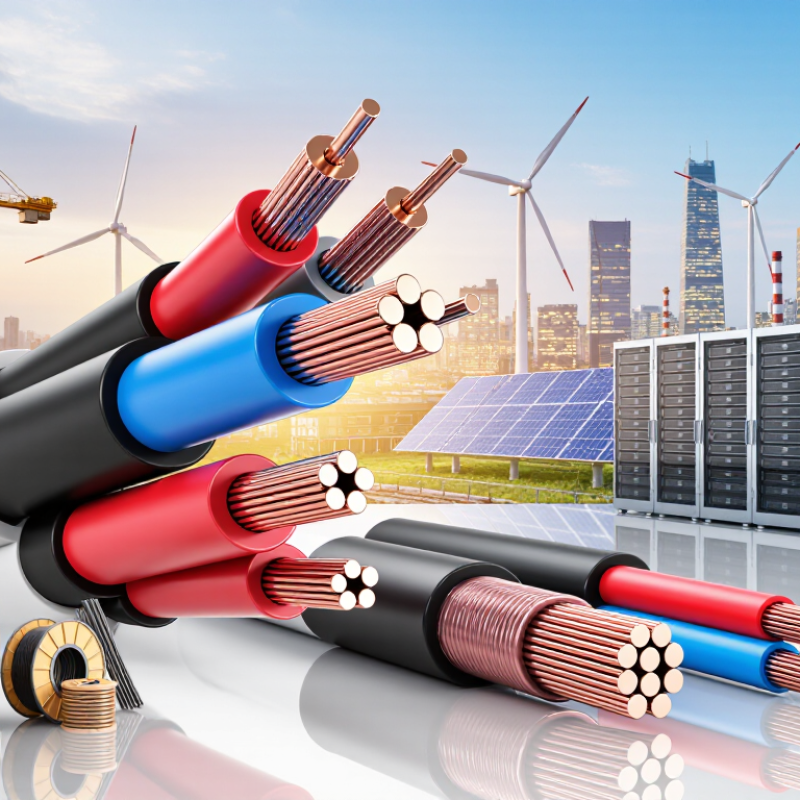
Power cable quality begins inside the cable, not with its outer appearance. A reliable cable uses conductors with consistent metal purity and accurate cross-sectional area. This helps control resistance, voltage drop, and heat during operation. Insulation must also match the rated voltage, temperature, moisture, and mechanical conditions. A thick jacket alone proves little.
In practical inspections, technicians check conductor size, insulation thickness, flexibility, and surface defects. They also review test records, production traceability, and compliance with recognized electrical standards. A cable should pass insulation resistance, voltage, and dimensional tests before shipment. Small cracks may appear harmless. Later, they can allow moisture into the insulation. That risk is easy to underestimate.
Tips: Ask for recent test reports and clear technical data. Confirm the conductor material and actual cross-sectional area. Check temperature ratings for the installation environment. Inspect samples for uneven jackets, exposed strands, or stiff bending. Do not judge quality by weight alone. I have seen heavy cables fail because their insulation was poorly processed. Buyers should also compare declared specifications with independent test results. This step takes time, but skipping it can create expensive replacement work. Even experienced teams sometimes focus too much on price. That is worth reconsidering.
How Materials and Construction Affect Cable Performance
Power cable quality begins with material selection, not packaging or a polished test certificate. Copper offers lower electrical resistance, about 0.01724 ohm·mm²/m at 20°C. Aluminium is lighter, but its resistance is higher, near 0.02826 ohm·mm²/m. These reference values align with IEC 60228 conductor requirements. A poorly compacted conductor can still create hot spots, despite using the correct metal.
Insulation and construction determine whether that performance survives real conditions. Cross-linked polyethylene withstands higher operating temperatures than many general-purpose plastics. Correct screening controls electric stress around the conductor. Tight water-blocking layers reduce moisture movement after sheath damage. Bending radius also matters. A cable forced around a sharp corner may develop invisible insulation cracks. The failure appears much later. That delay often misleads buyers.
Demand is becoming less forgiving. The International Energy Agency’s Electricity 2024 report expects global electricity demand to grow by an average 3.4% annually from 2024 to 2026. More load means less tolerance for thermal losses and unreliable joints. Buyers should compare conductor resistance, current rating, sheath tests, ageing evidence, and installation records. Factory data helps, but field experience remains imperfect. One test cannot represent every soil, bend, temperature, or maintenance habit. That uncomfortable gap deserves attention.
Why International Standards Matter for Global Buyers
International standards give global buyers a common language for power cable quality. They define conductor resistance, insulation performance, voltage ratings, fire behavior, and testing methods. IEC 60502-1, for example, specifies requirements for power cables used in fixed installations. Without such references, a cable can appear acceptable while failing under heat, moisture, or mechanical stress.
The scale of grid investment makes this control more important. The International Energy Agency reported in Electricity Grids and Secure Energy Transitions that the world must add or replace about 80 million kilometers of grids by 2040. It also estimated that annual grid investment must rise above 600 billion US dollars by 2030. A failed cable can delay construction, damage equipment, and create expensive maintenance work. Small specification gaps matter.
Buyers should request test reports, traceability records, and certificates from accredited laboratories. They should also confirm whether testing covers the actual cable design, not merely a similar product. A certificate is not enough. Manufacturing consistency still requires sampling and inspection. This is where procurement becomes less comfortable. Paperwork may look complete, yet conductor resistance or sheath thickness can vary between batches. The IEC 60228 conductor standard helps control conductor classes and resistance values, while factory acceptance testing checks real production. Standards reduce uncertainty, but they do not remove the need for technical judgment.
Why Is Power Cable Quality Important for Global Buyers? - Why International Standards Matter for Global Buyers
| Quality Dimension | Relevant International Standard | What the Standard or Test Covers | Why It Matters to Global Buyers | Useful Verification Evidence |
|---|---|---|---|---|
| Rated voltage and construction | IEC 60502-1 | Power cables with extruded insulation for rated voltages from 1 kV up to 3 kV, including construction and test requirements. | Helps buyers compare cable designs consistently and reduce the risk of using a cable outside its intended voltage range. | Technical data sheet, construction drawing, type-test report, and routine-test records. |
| Conductor resistance and electrical performance | IEC 60228 | Conductor classes, nominal cross-sectional areas, and maximum direct-current resistance values for conductors used in cables. | Appropriate conductor resistance supports efficient current transmission and helps limit unnecessary voltage drop and heat generation. | Conductor material declaration, cross-sectional-area records, and measured resistance results corrected to the applicable reference temperature. |
| Insulation integrity | IEC 60811 series | Test methods for non-metallic insulating and sheathing materials, including mechanical, thermal, and aging properties. | Reliable insulation reduces the likelihood of short circuits, leakage current, premature failure, and safety incidents. | Tensile and elongation results, aging tests, heat-shock results, and material test certificates. |
| Flame propagation | IEC 60332-1-2 | Vertical flame propagation test for a single insulated wire or cable under defined laboratory conditions. | Provides a recognized method for assessing whether a single cable specimen limits flame spread when exposed to fire. | Accredited laboratory report identifying the exact cable construction and test method used. |
| Smoke emission | IEC 61034-2 | Measurement of smoke density from burning cables under defined test conditions. | Lower smoke visibility loss can support evacuation and emergency response in enclosed public or industrial spaces, where specified by the project. | Smoke-density test report with the measured minimum light transmittance and specimen details. |
| Acid gas and halogen emissions | IEC 60754-1 and IEC 60754-2 | Determination of halogen acid gas content and measurement of acidity and conductivity of gases evolved during combustion. | Helps assess corrosive and toxic combustion products where low-smoke, halogen-free performance is required by the installation specification. | Halogen-acid-gas, pH, and conductivity test results linked to the supplied cable materials. |
| Water-blocking performance | Applicable cable product standard and project specification | May include radial or longitudinal water-penetration tests, depending on the cable design and installation environment. | Important for buried, outdoor, wet-location, and infrastructure projects where moisture migration could damage insulation or metallic components. | Declared water-blocking construction, penetration-test report, and installation suitability statement. |
| Mechanical durability | IEC 60811 series and the applicable product standard | Evaluates properties such as tensile strength, elongation, aging resistance, and behavior after thermal exposure. | Durable insulation and sheathing help the cable withstand transport, installation, temperature cycling, and service conditions. | Material batch records, aging-test results, dimensional inspection, and visual examination reports. |
| Routine and sample testing | Applicable IEC product standard | Routine tests are generally performed on manufactured lengths, while sample or type tests verify broader design and performance characteristics. | A documented test plan provides traceability and helps buyers confirm that production quality matches the approved design. | Signed test certificates, inspection and test plans, calibration records, and production-lot traceability. |
| Regulatory and market acceptance | Applicable national regulations, project specifications, and conformity requirements | Confirms that the cable meets the requirements applicable to its destination market, installation type, voltage level, and building or infrastructure project. | Early compliance checks can reduce customs delays, failed inspections, redesign costs, replacement shipments, and project downtime. | Declaration of conformity, destination-market documentation, approved drawings, independent inspection records, and complete technical files. |
How Poor-Quality Cables Increase Safety and Supply Risks
For global buyers, power cable quality directly affects safety, uptime, and delivery confidence. A low-grade conductor can run hot under continuous load. Poor insulation may crack during installation, exposing workers to electric shock and short circuits. At factory inspection, a jacket may look smooth while conductor resistance or dimensions fail testing. Small deviations matter.
The NFPA report Home Fires Involving Electrical Failure or Malfunction found about 45,000 U.S. home fires annually from 2012 to 2016. These incidents caused approximately 420 deaths, 1,370 injuries, and 1.3 billion dollars in direct property damage. The report covers electrical failures broadly, not cables alone, but it shows the consequences of weak components. Supply risks can be quieter. Voltage drop, damaged sheaths, and failed insulation may stop production without warning. Replacement drums then require new testing, transport, customs clearance, and labor. Delays become expensive quickly.
The International Energy Agency’s 2023 report Electricity Grids and Secure Energy Transitions estimates that 80 million kilometres of grids must be added or refurbished by 2040. This scale increases pressure to purchase faster and cheaper. Buyers should request batch traceability, conductor-resistance results, insulation testing, and independent verification against applicable IEC standards. A certificate helps, but it does not prove every drum matches the tested sample. That assumption deserves more scrutiny. Sample testing, visual checks, and controlled storage can expose defects before installation. Even careful procurement is imperfect, especially when test records are incomplete or rushed.
How Buyers Can Evaluate Power Cable Quality Before Purchase
Why Is Power Cable Quality Important for Global Buyers?
Before purchase, buyers should verify the cable’s construction, testing, and traceability. Check conductor material, cross-sectional area, insulation thickness, voltage rating, and temperature class. IEC 60228 defines conductor resistance and construction requirements, so measured resistance should match the declared class. Do not rely on a certificate alone. Request recent routine-test records, type-test evidence, and batch identification. For medium- and high-voltage cables, partial-discharge and withstand-test results are especially important. A small paperwork gap can become a major installation delay.
The IEA’s Electricity Grids and Secure Energy Transitions report (2023) estimates that annual grid investment must exceed 600 billion US dollars by 2030. More projects mean more pressure on cable quality and delivery consistency. Buyers should compare factory test methods, calibration dates, sampling plans, and packaging conditions. Inspect wooden drums for cracks, water marks, and damaged seals. Ask for conductor resistance results at the stated reference temperature. This detail is easy to miss. It should not be.
Tips: Request a sample before signing a large order. Confirm the sample matches the production design. Arrange an independent inspection when project risk is high. Review the manufacturer’s corrective-action records, not only its sales documents. A factory audit is useful, but it is not perfect. Include clear acceptance criteria, retesting procedures, and warranty responsibilities in the purchase contract.
Related Posts
-
Top 10 Power Cable Suppliers in China for Global Buyers?
-
Discovering the Best Voltage Cable Options for Your Electrical Projects
-
Why Choose the Right Electrical Power Cable for Your Project?
-
How to Choose the Best Power Cable for Your Global Sourcing Needs
-
Maximizing Performance with Best Low Voltage Cable Strategies for Enhanced Efficiency
-
Empowering the World with China's Leading Electrical Power Cable Innovations