





China Top 10 Medium Voltage Cable Manufacturers?
China’s medium-voltage cable industry supports expanding power grids, renewable projects, industrial parks, and urban infrastructure. This makes supplier selection more technical than a simple sales ranking.
The International Energy Agency’s Electricity 2024 report highlights the growing need for grid investment as electricity demand and renewable generation increase. Its findings reinforce the importance of reliable distribution equipment, including Medium Voltage Cable systems. Grand View Research also identifies grid expansion, renewable integration, and industrial development as major market drivers in its Medium Voltage Cable Market analysis.
China has several manufacturers with substantial production capacity and project experience. However, “top” should not mean the largest factory alone. A useful comparison should examine voltage ranges, conductor materials, insulation systems, quality controls, export records, and completed utility projects. Compliance with IEC 60502-2, GB/T 12706, and relevant testing requirements also deserves close attention.
This guide reviews ten leading Chinese manufacturers through those practical criteria. It considers public company information, certification evidence, product catalogs, technical capabilities, and industry reputation. Where possible, readers should verify current certificates and project references directly with each manufacturer.
A neat ranking can still mislead. Company strength may vary between low-smoke cables, submarine applications, mining cables, and renewable-energy connections. Some manufacturers communicate better than they document. That matters.
Buyers should also evaluate delivery consistency, installation support, warranty terms, and after-sales responsiveness. A cable may pass laboratory tests yet perform poorly when storage, jointing, or installation conditions are neglected. The strongest supplier is therefore not always the cheapest or most famous. It is the one that matches the project’s operating environment, compliance needs, and long-term reliability targets.
What Defines a Medium Voltage Cable Manufacturer in China?
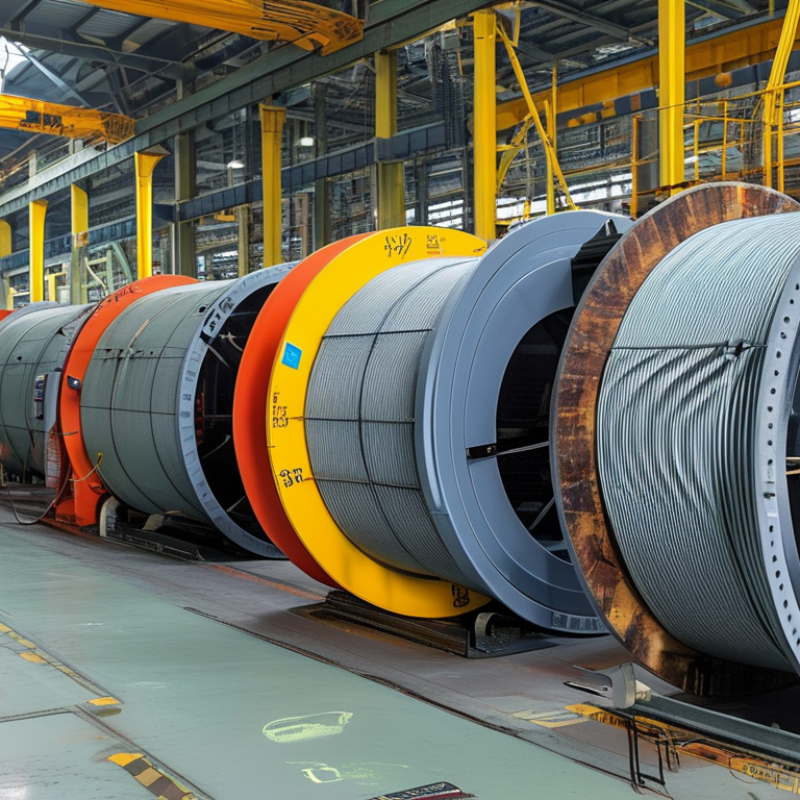
A genuine medium voltage cable manufacturer does more than purchase copper and print a label. It develops cable structures, controls production, and verifies performance before delivery. Typical products may serve systems from 3.6 kV to 35 kV, depending on project requirements and local standards.
Experience appears in practical details.
Can the factory explain conductor compaction, insulation thickness, shielding, and water-blocking design clearly? During a plant visit, buyers should inspect extrusion lines, clean production areas, curing equipment, and finished cable storage.
Testing should include conductor resistance, partial discharge, voltage withstand, insulation checks, and dimensional inspection. Test records must connect each result to a production batch.
Reliable manufacturers also maintain traceability from raw materials to final drums. They should provide technical drawings, routine test reports, quality procedures, and installation guidance.
Independent certification can support credibility, but paperwork alone proves little. Ask about similar projects, failure handling, and response times after delivery.
Some factories look impressive but explain little.
That matters. A supplier may meet a standard sample yet struggle with long-term consistency. Buyers should compare actual evidence, not only catalog promises.
Manufacturing quality is never perfectly static; equipment ages, staff change, and processes need review. Careful audits, witnessed testing, and clear contracts remain necessary when selecting a Chinese medium voltage cable manufacturer.
How China’s Top 10 Medium Voltage Cable Manufacturers Are Selected
China’s top 10 medium voltage cable manufacturers should be selected through evidence, not advertising claims. The assessment should examine production capacity, technical expertise, quality controls, and verified project experience. A large factory is not automatically a reliable supplier.
Selection begins with documented compliance. Auditors can review IEC 60502-2 testing, ISO 9001 procedures, and local certification records. They should inspect conductor stranding, insulation extrusion, shielding, and cable sheathing. Samples must undergo conductor resistance, insulation thickness, voltage, and partial discharge tests. Small details matter.
Factory visits add practical insight. Reviewers can check laboratory equipment, calibration records, raw material storage, and batch traceability. Delivery performance also deserves attention, including lead times, packaging, export documentation, and after-sales response. Technical teams should explain cable designs for 6 kV, 10 kV, 20 kV, or 35 kV systems without vague promises.
The final ranking should combine test results, customer references, manufacturing consistency, and transparent communication. Independent inspection is preferable when project value is high. Some information may remain difficult to verify, especially private financial data or confidential contracts. That limitation should be stated openly. A top-ten list is a working assessment, not permanent truth. Performance can change after one failed batch, delayed shipment, or major process improvement.
Profiles of China’s Top 10 Medium Voltage Cable Manufacturers
China’s top ten medium voltage cable manufacturers are best assessed by capability, not visibility.
Their profiles often show experience with 6–35 kV systems, copper and aluminum conductors, and XLPE insulation. Several operate large drawing, stranding, and extrusion lines. Some also produce screened cables for substations, factories, rail projects, and renewable energy sites.
A reliable manufacturer should provide type-test reports, routine-test records, and clear production traceability. Look for evidence of conductor resistance checks, partial-discharge testing, sheath inspections, and controlled curing.
Factory experience matters. Engineers who understand bending radius, installation temperature, and jointing conditions can prevent expensive field failures. Still, a polished catalog proves little. I would question unclear test dates, vague material descriptions, and certificates without matching cable specifications. That caution is not negative; it is practical.
Tips:
Request a recent factory audit. Compare test standards carefully. Ask for sample cross-sections and packing details. Check whether the cable drum protects against moisture during long transport. A useful profile should also explain delivery capacity, customization limits, after-sales engineering, and response time. Some manufacturers appear strong on price but weak on documentation. That difference may only become visible after installation. Judge the whole supply chain, not one impressive quotation.
Key Products, Technologies, and Industry Applications
China’s top ten medium voltage cable manufacturers are often assessed through products, testing depth, and application experience. Their portfolios commonly cover 6–35 kV XLPE cables, copper or aluminum conductors, screened designs, fire-resistant cables, and flexible industrial versions. Some suppliers also produce water-blocked cables for humid soil and demanding underground routes.
Technology matters beyond conductor size. Reliable factories use controlled conductor stranding, smooth insulation extrusion, and carefully bonded semiconductor layers. Metallic screens must manage fault current safely. Routine tests usually include insulation resistance, withstand voltage, conductor resistance, and dimensional checks. More advanced laboratories perform partial discharge testing, thermal aging, and long-term water-tree evaluation. Traceable batches help engineers investigate failures months after installation.
Applications vary widely. Utility networks need stable performance across substations and urban feeders. Solar and wind projects require cables that tolerate outdoor exposure, repeated temperature changes, and difficult cable trenches. Rail systems, mines, chemical plants, and large buildings may demand flame resistance, low smoke, or stronger mechanical protection. Field experience shows that installation quality can matter as much as factory quality. A perfect cable can still fail after poor bending control or damaged screen connections. No ranking is perfect. A catalogue can look impressive, yet project references and independent test records deserve closer inspection.
| Rank | Anonymous Manufacturer Profile | Core Medium-Voltage Products | Typical Voltage Classes | Insulation and Cable Construction | Key Technologies | Applicable Standards | Typical Industry Applications | Quality and Testing Focus |
|---|---|---|---|---|---|---|---|---|
| 01 | Profile A Large integrated power-cable producer |
Single-core MV cables Three-core MV cables Armoured cables | 3.6/6 kV to 26/35 kV | XLPE insulation; copper or aluminium conductor; copper-wire or copper-tape screen; PVC or halogen-free outer sheath | Triple extrusion, dry curing, conductor compacting, longitudinal water blocking, automated eccentricity control | GB/T 12706.2, IEC 60502-2, IEC 60228 | Utility distribution, industrial substations, infrastructure projects, commercial power networks | Partial-discharge testing, insulation-resistance testing, AC withstand testing, dimensional inspection |
| 02 | Profile B High-volume utility cable specialist |
Distribution cables Overhead covered conductors Fire-resistant MV cables | 6/10 kV to 18/30 kV | XLPE or fire-resistant insulation; aluminium or copper conductor; metallic screen; flame-retardant or low-smoke sheath options | Continuous vulcanization, flame-retardant compound formulation, screen bonding, online spark detection | GB/T 12706.2, IEC 60502-2, IEC 60332, IEC 60754 where applicable | Urban distribution, public facilities, tunnels, railway auxiliary power, dense commercial areas | Flame-propagation tests, smoke and halogen assessment, conductor resistance, high-voltage routine tests |
| 03 | Profile C Renewable-energy cable manufacturer |
Wind-farm collector cables Solar plant MV cables Flexible MV cables | 6/10 kV to 26/35 kV | XLPE insulation; UV-resistant and weather-resistant sheath; optional radial or longitudinal water blocking; copper or aluminium conductor | Low-temperature sheath design, torsion-resistant construction, water-tree-resistant insulation, enhanced bending performance | IEC 60502-2, GB/T 12706.2, IEC 60228, project-specific renewable-energy specifications | Wind farms, photovoltaic power stations, battery-energy-storage sites, remote renewable substations | Thermal ageing, UV resistance, bending tests, water penetration, partial discharge, sheath integrity |
| 04 | Profile D Industrial and mining cable specialist |
Mining MV cables Heavy-duty armoured cables Trailing or reeling cables | 3.6/6 kV to 18/30 kV | XLPE or rubber-based insulation; robust metallic armour; reinforced sheath; copper conductor commonly used for flexible designs | Impact-resistant armour, enhanced flex life, oil-resistant sheath compounds, mechanical-protection design | GB/T 12706.2, IEC 60502-2, IEC 60228, relevant mining safety requirements | Coal mines, metal mines, cement plants, quarries, heavy manufacturing, mobile industrial equipment | Mechanical impact, tensile strength, flexing endurance, flame retardance, insulation and sheath testing |
| 05 | Profile E Subsea and water-resistant cable producer |
Water-blocked MV cables Submarine distribution cables Port and offshore cables | 6/10 kV to 26/35 kV | XLPE insulation; copper-wire or lead-free metallic screen; swellable tapes or water-blocking compounds; reinforced outer protection | Radial and longitudinal water blocking, corrosion-resistant screening, sheath sealing, controlled moisture ingress prevention | IEC 60502-2, GB/T 12706.2, IEC 60228, additional marine project specifications | Ports, offshore platforms, coastal utilities, water-treatment plants, river-crossing installations | Water penetration, sheath pressure, corrosion resistance, insulation ageing, AC withstand, partial discharge |
| 06 | Profile F Railway and transport infrastructure supplier |
Railway feeder cables Metro power cables Low-smoke MV cables | 6/10 kV to 18/30 kV | XLPE insulation; copper or aluminium conductor; low-smoke, halogen-free or flame-retardant sheath; optional armour | Low-smoke compound processing, electromagnetic compatibility considerations, compact cable design, flame-retardant construction | IEC 60502-2, GB/T 12706.2, IEC 60332, IEC 60754, IEC 61034 where specified | Railway traction substations, metro systems, tunnels, airports, signaling and auxiliary power systems | Vertical flame tests, smoke density, acidity and conductivity of gases, partial discharge, dimensional control |
| 07 | Profile G Export-oriented customized cable producer |
IEC-compliant MV cables BS-compliant variants Custom sheath and armour designs | 3.6/6 kV to 26/35 kV | XLPE insulation; copper or aluminium conductor; copper-tape, copper-wire or lead-sheath screen; PVC, PE or LSZH sheath | Multi-standard engineering, customized conductor sizes, metric and imperial dimensional adaptation, export packaging | IEC 60502-2, IEC 60228, BS 6622 where specified, and project-specific utility standards | International distribution networks, EPC projects, industrial plants, overseas infrastructure and energy projects | Type testing, routine testing, sample testing, certificate traceability, drum and marking verification |
| 08 | Profile H Smart-grid and urban distribution specialist |
Compact MV cables Detectable cables Urban network cables | 6/10 kV to 18/30 kV | XLPE insulation; compact stranded conductor; metallic screen; moisture-resistant and low-shrinkage sheath systems | High dimensional accuracy, compact conductor design, cable identification systems, distributed temperature-monitoring compatibility | GB/T 12706.2, IEC 60502-2, IEC 60228, utility-specific smart-grid requirements | Urban substations, ring-main networks, data centers, hospitals, high-rise developments and industrial parks | Partial discharge, conductor compactness, screen continuity, thermal performance and installation-radius verification |
| 09 | Profile I Specialty fire-performance cable manufacturer |
Fire-resistant MV cables Circuit-integrity cables Emergency-power cables | 3.6/6 kV to 18/30 kV | XLPE or fire-resistant insulation system; mica-based fire barrier where specified; copper conductor; flame-retardant or LSZH sheath | Fire-barrier layering, ceramic-forming or mica tape systems, low-smoke sheath technology, controlled thermal expansion | IEC 60502-2, IEC 60331 where applicable, IEC 60332, IEC 60754 and IEC 61034 | Hospitals, airports, high-rise buildings, emergency systems, petrochemical and public-safety facilities | Fire resistance, circuit integrity, flame propagation, smoke emission, insulation ageing and AC withstand |
| 10 | Profile J Large-conductor and special-project cable producer |
Large cross-section MV cables Parallel-circuit cables Special installation cables | 6/10 kV to 26/35 kV | XLPE insulation; large copper or aluminium conductor; copper-wire screen; PE, PVC or enhanced-performance outer sheath | Large-conductor compacting, low-loss conductor design, thermal calculation, controlled curing and custom drum engineering | GB/T 12706.2, IEC 60502-2, IEC 60228, IEC 60840 for higher-voltage project requirements where applicable | Power plants, industrial substations, steel mills, petrochemical complexes, large commercial power systems | Conductor resistance, thermal-cycle testing, partial discharge, AC withstand, sheath testing and installation assessment |
How to Compare and Choose a Suitable Chinese Manufacturer
China’s medium-voltage cable market offers many capable manufacturers, but price alone is a weak filter. The IEA’s Electricity 2024 report forecasts global electricity demand to grow by about 3.4% annually through 2026. This growth increases demand for reliable distribution networks and replacement cables. When comparing Chinese suppliers, check voltage ratings, conductor materials, insulation compounds, and production capacity. Ask for recent type-test reports and factory quality records.
A suitable manufacturer should demonstrate compliance with IEC 60502-2 or IEC 60840, depending on the cable design and voltage level. Request test results for partial discharge, conductor resistance, tensile strength, and sheath durability. Verify whether tests were completed by an accredited independent laboratory. Factory audits should examine extrusion lines, clean production areas, calibration records, and batch traceability. Also review delivery performance, export documentation, warranty terms, and technical support. A polished website proves very little.
Tips: Compare three written quotations using the same specification sheet. Do not accept vague phrases such as “international standard.” Ask for conductor cross-section drawings, compound certificates, and packing photographs. Check a sample drum carefully; uneven sheathing or unclear markings deserves attention. A lower offer may hide weaker inspection procedures. Yet, a higher price does not guarantee better cable. This is where procurement teams often judge too quickly. Use a weighted scorecard, and keep every claim documented. Sources: International Energy Agency, Electricity 2024; International Electrotechnical Commission, IEC 60502-2 and IEC 60840.
China Top 10 Medium Voltage Cable Manufacturers: Technical Screening Reference
The chart shows the maximum rated voltage of common medium-voltage cable classes defined in IEC 60502-2. Buyers can use these standardized voltage levels as a first technical filter when comparing Chinese cable manufacturers, together with conductor material, insulation type, testing capability, delivery record, and certification.
Reference: IEC 60502-2 medium-voltage cable rated-voltage series. The notation U₀/U represents the rated voltage between conductor and earth / between conductors. Actual manufacturer selection should match the project voltage system and applicable local standards.
Related Posts
-
Understanding Medium Voltage Cables: Key Benefits and Applications in Modern Power Systems
-
Maximizing Performance with Best Low Voltage Cable Strategies for Enhanced Efficiency
-
Best Water Resistant Cable Options for Your Projects?
-
The Ultimate Guide to Sourcing the Best Electric Cable Wire for Your Business Needs
-
Innovative Alternatives for Electric Cables Enhancing Efficiency and Sustainability in the Industry
-
Best Medium Voltage Cable Options for Your Project Needs?